

Why Subaru Tires Must Match on All Four Wheels
On a Subaru, one mismatched tire can strain the all wheel drive system. Here is why, and what to do about it.
Why Subaru tires must match on all four wheels comes down to how the car is built.
Subaru’s symmetrical all wheel drive connects all four wheels through the drivetrain, and it expects all four tires to be the same size and to roll the same distance with every turn. If one tire is a different brand, size, or noticeably more worn than the others, the drivetrain sees a constant speed difference between the wheels and works to compensate for it on every drive. Over time that can wear or damage expensive AWD components. Here is what that means in practice.
How symmetrical AWD works
Most Subarus send power to all four wheels all the time. The system includes a centre differential or coupling that lets the front and rear axles turn at slightly different speeds, which they naturally do when you go around a corner. That flexibility is designed for short, temporary differences, like a turn or a patch of ice where one wheel slips. It is not designed to absorb a permanent difference caused by one tire being larger or smaller than the rest.
Why a small difference matters
A worn tire has a slightly smaller diameter than a new one, so it has to turn more times to cover the same distance. That difference sounds tiny, a few millimetres of tread, but it happens on every single rotation, thousands of times per kilometre. The AWD system reads it as constant wheel slip and keeps working to reconcile it. That constant effort builds heat and wear in the parts that manage power between the axles, and the repair bill for those parts is far larger than the price of a tire.
What “matching” actually means
Subaru’s general guidance is that all four tires should be the same brand, model, and size, with the same load and speed ratings, and with tread depths that are very closely matched. Your owner’s manual gives the exact tolerance for your model, and it is worth reading, because it is tighter than most drivers expect. Mixing two brands, or putting two new tires on one axle with two worn ones on the other, is exactly the situation the guidance is trying to prevent.
What to do after a puncture
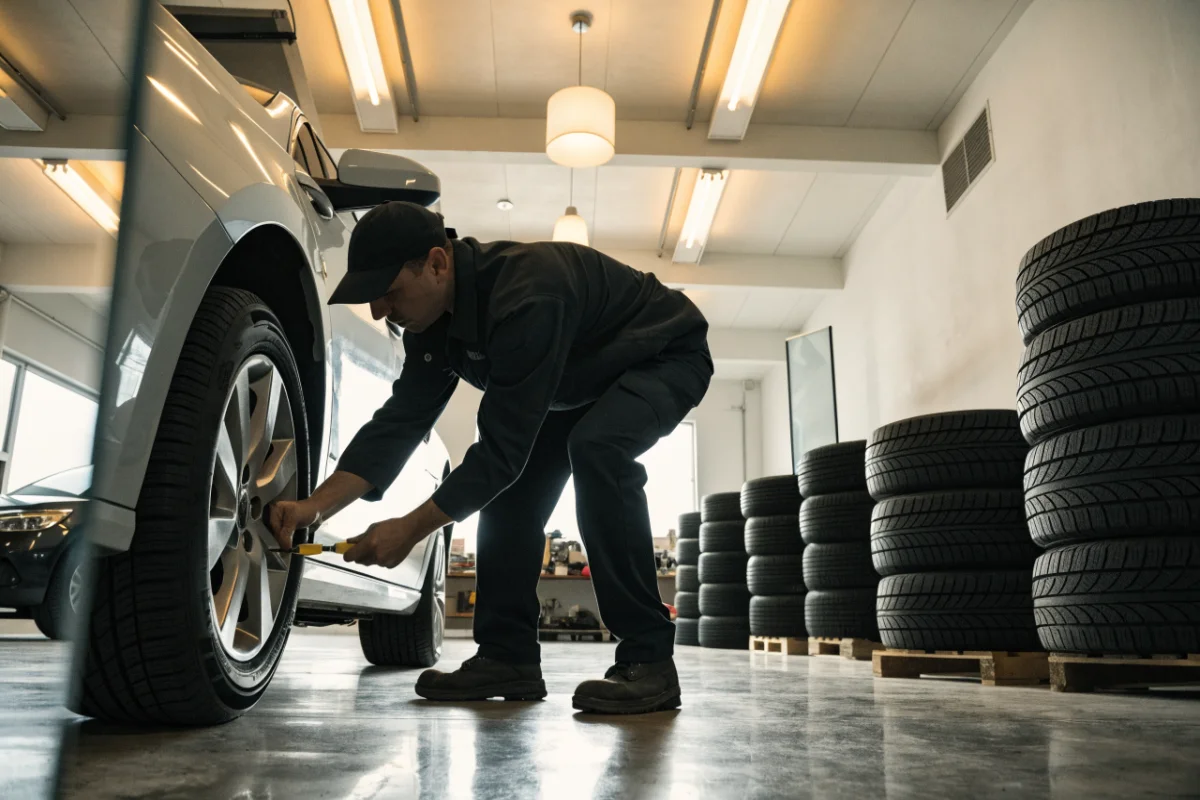
This is where Subaru owners most often get caught. You get a flat that cannot be repaired, and the other three tires are half worn. Buying one new tire leaves you with one tire much taller than the rest. There are three common solutions. If the other three tires are fairly new, one new tire may be close enough to stay within your manual’s tolerance. A shop can measure all four and tell you. If they are more worn, many tire shops can shave the new tire, removing tread on a machine until its diameter matches the other three. It sounds wasteful, but it is often far cheaper than replacing all four. If the set is already well worn, replacing all four at once is usually the sensible answer, since you would be replacing them soon anyway.
Rotation keeps the set matched
Regular tire rotation matters more on an AWD Subaru than on most cars, because it keeps all four tires wearing at the same rate. Front tires usually wear faster, so without rotation the front and rear drift apart in diameter, which recreates the same mismatch problem slowly. Following the rotation interval in your manual is one of the cheapest ways to protect the drivetrain.
Winter tires follow the same rule
If you run a separate set of winter tires, the same rule applies: buy them as a matched set of four, and do not fit two winter tires with two all-seasons. Beyond the drivetrain concern, mixing tire types front to rear gives the car uneven grip, which is exactly what you do not want on an icy road. When you book your seasonal winter tire change, it is a good time to have all four measured.
What about the temporary spare?
Many Subarus come with a compact temporary spare, which is smaller than the regular tires. Your manual explains how it should be used. It is intended to get you to a repair, at reduced speed and for a limited distance, not for ongoing driving. Treat it as a short-term fix and get the regular tire repaired or replaced promptly.
Signs the drivetrain is already under strain
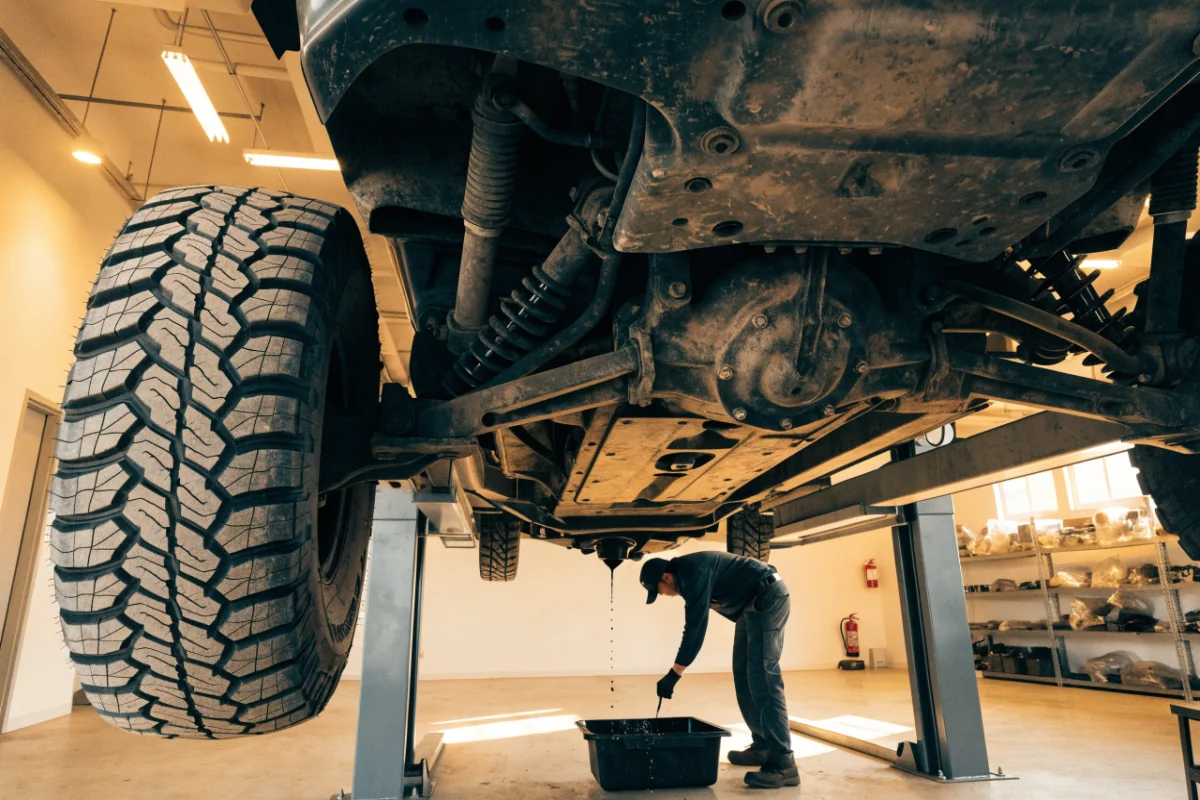
If a car has been driven for a long time on mismatched tires, you may notice binding or a hopping feeling in tight, slow turns such as parking lot manoeuvres, clunks, whining from the drivetrain, or a warning light. Those symptoms deserve a proper inspection rather than a guess, because the fix depends on which part is affected.
The bottom line
On a Subaru, tires are not just a wear item; they are part of the drivetrain. Keep all four matched, rotate them on schedule, and handle punctures with the tolerance in mind, and you protect the AWD system that makes the car what it is. If you want your tires measured or your drivetrain checked, our Subaru repair service in Mississauga understands the boxer engine and symmetrical AWD, and we quote in writing before any work. Call FastLane Mechanics at (905) 624-4646. Uneven tire wear can also point to an alignment issue, so see our guide on signs your car needs a wheel alignment.