

Maximizing Your EV Battery Lifespan During Winter
Cold weather can drain your EV's range. Here's how to maintain battery health when temperatures drop in the GTA.
Cold weather affects EV batteries more than most drivers expect.
Range can drop by 20–40% in winter, depending on the vehicle and temperature. Most of that loss is temporary — but how you manage your battery through winter has a real impact on its long-term health.
Why Cold Weather Affects EV Batteries
Lithium-ion batteries operate through a chemical reaction that slows down in cold temperatures. Below freezing, the battery's internal resistance increases, which reduces both the power it can deliver and the energy it can store. At the same time, the cabin heater draws significant power, further reducing available range.
1. Precondition While Plugged In
Most EVs allow you to set a departure time or precondition the cabin remotely. When you warm the cabin while still plugged into a charger, that energy comes from the grid — not the battery. You'll start every drive with a full charge and a warm interior, which makes a measurable difference in winter range.
2. Avoid Charging to 100% Unless Necessary
Most EV manufacturers recommend keeping the battery between 20% and 80% for daily use. A full charge puts more stress on the battery chemistry over time. The exception is before a long trip — charge to 100% and drive soon after. Leaving the battery at 100% for extended periods accelerates degradation.
3. Keep the Battery Above 20%
Deep discharges in cold weather are harder on the battery than in summer. Try to plug in before the battery drops below 20%. If you're parking outdoors overnight in freezing temperatures, leaving the vehicle plugged in allows the battery management system to maintain optimal temperature without draining the pack.
4. Use Regenerative Braking
Regenerative braking recovers energy as you slow down and returns it to the battery. In winter, some EVs limit regenerative braking until the battery warms up — this is normal. Once the battery reaches operating temperature, full regeneration resumes. Using a higher regen setting in urban driving extends range more efficiently than frequent acceleration and hard braking.
5. Reduce Cabin Heat Where Possible
The cabin heater is the single largest range drain in winter. Using seat heaters and the steering wheel heater instead of the full HVAC system is significantly more efficient — they use a fraction of the energy. If your vehicle has a heat pump, it is far more efficient than a resistive heater.
When to Get the Battery Checked
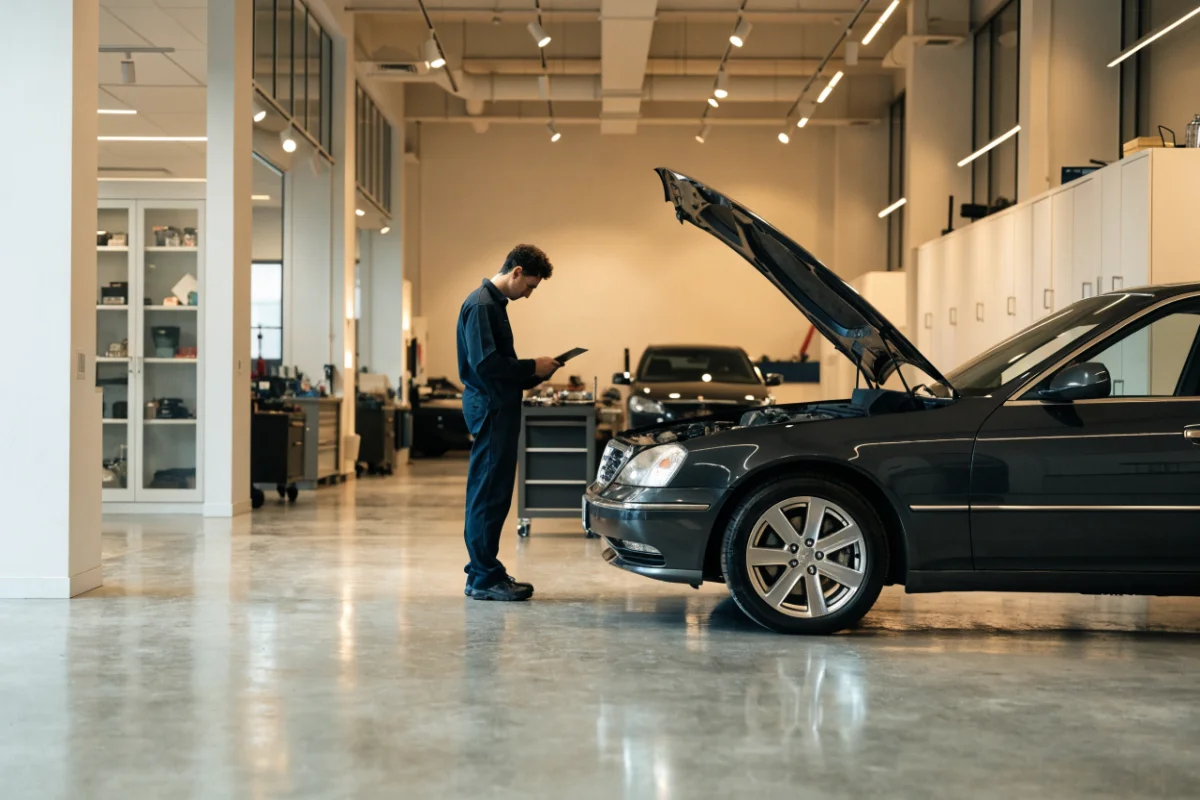
If your range has dropped significantly beyond what cold weather would explain, or if a battery warning light has come on, it's worth a diagnostic inspection. We use OEM-level scan tools to read EV-specific fault codes and assess battery health as part of our EV repair service in Mississauga. The same diagnostics apply to hybrid battery service. A drop in capacity that persists in warmer weather is a sign the battery pack needs attention.
Final Thoughts
Winter range loss is normal — permanent capacity loss is not. Managing charge levels, preconditioning, and keeping the battery warm goes a long way toward protecting the pack long-term. If you have questions about your EV's winter performance, call us at (905) 624-4646 — we're open until 8PM weekdays.